
In 2023, the global market for consumer drones was valued at USD 5.2 billion and is projected to grow threefold, reaching USD 15.78 billion by 2032. This explosive growth underscores the widespread adoption of drone technology and the consequent critical need for effective countermeasures. Counter-Unmanned Aircraft Systems (C-UAS) have therefore emerged as essential solutions to mitigate potential drone threats.
To safeguard public safety and protect critical infrastructure—such as hospitals, airports, and government offices located in urban environments—the deployment of counter-drone systems is imperative. Unauthorized UAS incursions pose multifaceted risks, including physical collisions with infrastructure, surveillance and disruption of critical operations, unauthorized data collection, and smuggling of contraband. Securing these sensitive areas necessitates advanced C-UAS technology.
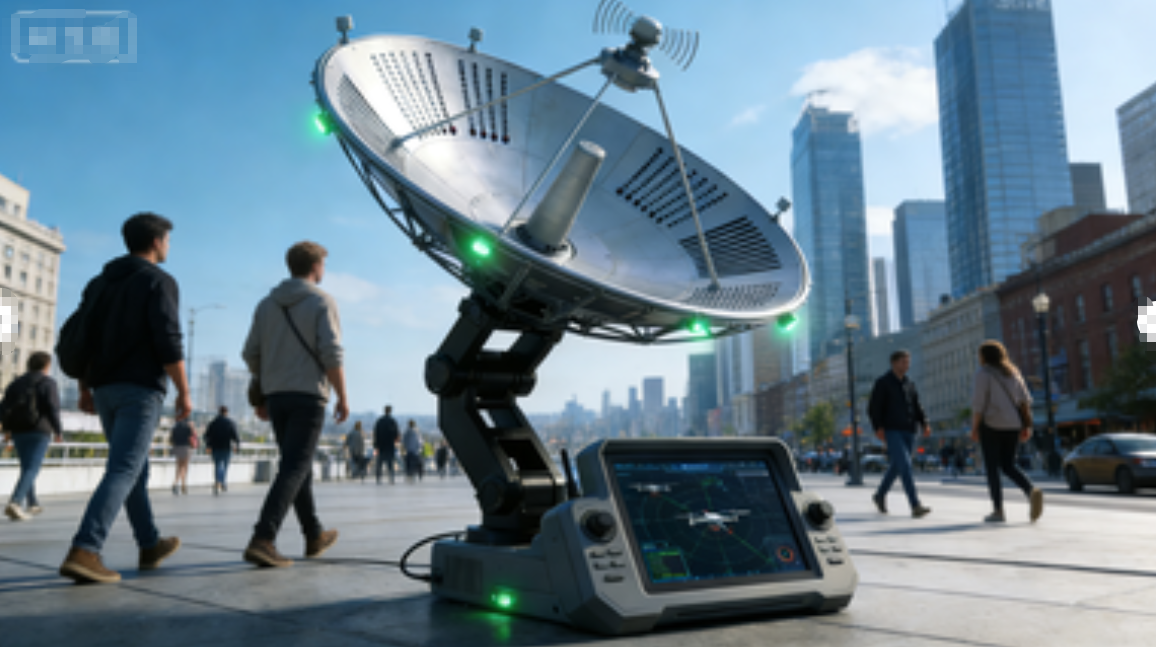
Counter-UAS systems are designed to perform three core functions: detection and tracking of unauthorized drones; threat mitigation through signal jamming or disruption; and neutralization by forcing drones to land or depart. These systems are categorized by their primary function: detection systems (e.g., drone radars, RF detectors, electro-optical cameras); neutralization systems (e.g., jammers, GPS spoofers); and comprehensive, integrated systems that are stationary, vehicle-mounted, or handheld.
The necessity for C-UAS in urban planning is amplified by sales figures: 8.2 million consumer-grade drones were sold in 2024, a number expected to rise to 9.5 million or more by 2029. While this increases public access to technology, it also raises the risk of misuse. Drones capable of surveillance, payload delivery, and disruption of essential services are often too small for conventional detection systems.
Urban areas can address these threats with tailored solutions, such as portable handheld systems offering passive detection and directional control, or stationary systems providing extended detection and jamming ranges for critical infrastructure protection. Proactively investing in C-UAS during the urban planning phase is crucial to prevent severe outcomes from unauthorized drone incidents.
Deploying these systems in cities presents distinct challenges: dense infrastructure can obstruct lines of sight for detection and cause radar signal reflections; jamming systems risk interfering with legitimate communications; finding suitable installation locations near residential areas raises privacy concerns; and legal and regulatory frameworks are still developing alongside the technology.
These challenges can be addressed through advanced, integrated C-UAS technologies that combine detection, jamming, and visual verification capabilities to reduce false positives and ensure accuracy. Utilizing systems with passive RF detection for 360-degree monitoring minimizes active signal emission and collateral impact. Furthermore, deployment must adhere to best practices that prioritize minimizing disruption to public networks and infrastructure while fully respecting civil liberties.
In conclusion, as the proliferation of drones accelerates, so does the threat from their unauthorized use. Counter-UAS systems are a fundamental necessity for protecting critical infrastructure and public spaces. By incorporating C-UAS considerations into urban planning, authorities can adopt more effective deployment strategies, select optimal systems, and ultimately ensure a safer and more secure urban future.