
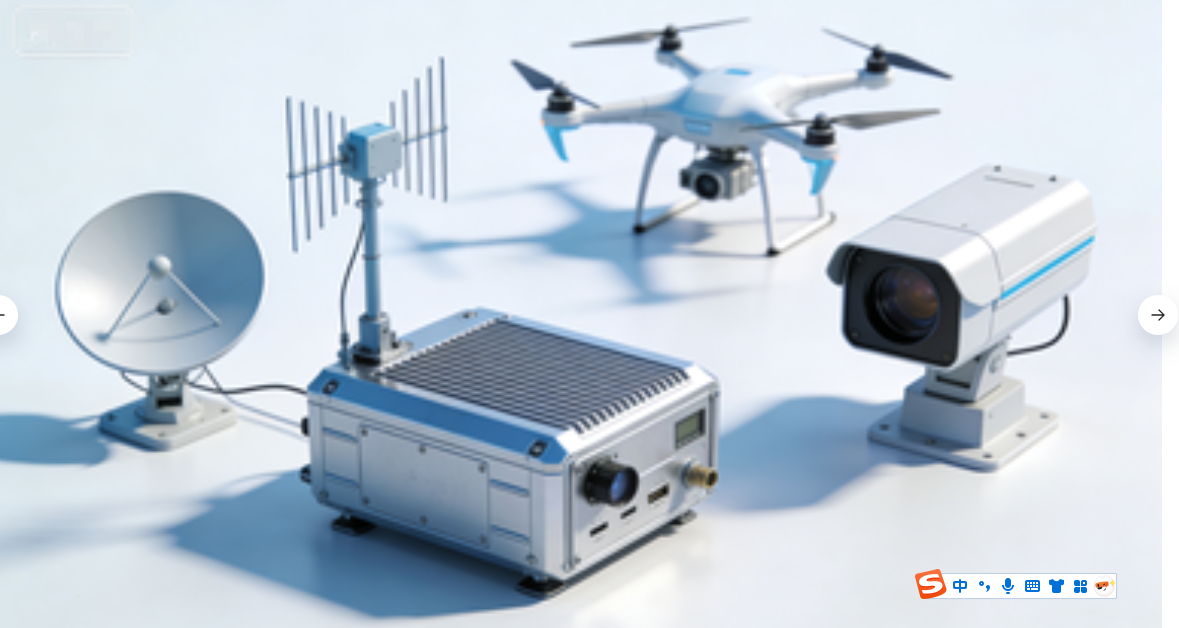
Conventional radar systems often struggle to identify small drones or those flying close to the ground. Without a specially optimized radar solution, effectively countering the threats posed by such drones in real-world combat becomes extremely challenging.
Key challenges in drone detection include electromagnetic interference, optical limitations, limited exposure time, complex flight patterns, outdated frequency databases, and the difficulty of balancing sensitivity with accuracy.
Urban environments are filled with potential interference sources such as communication antennas, power cables, and LED lights, all of which can significantly degrade RF sensor performance. Camera systems may confuse drones with birds or aircraft and are vulnerable to severe weather or backlighting conditions. In urban settings, drones may only appear for a few seconds before disappearing behind obstacles, making exposure time extremely limited. Complex flight patterns such as hovering and vertical movement can confuse automatic tracking algorithms. Additionally, RF detection systems rely on pre-established frequency databases that quickly become outdated as the drone market expands rapidly.
Most critically, detection equipment must maintain both a low false alarm rate and a low missed detection rate—a difficult balance requiring sensitivity enough to catch all drones without generating constant, disruptive false alerts.
To ensure reliable detection performance and accurately identify genuine drone threats in complex environments, specially designed intelligent algorithms are essential.
Our team considered these detection challenges from the earliest stages of system design. By integrating multiple intelligent algorithms that cross-filter and process signals from various sensors, our systems are better adapted to reliably detect even the smallest drones.